
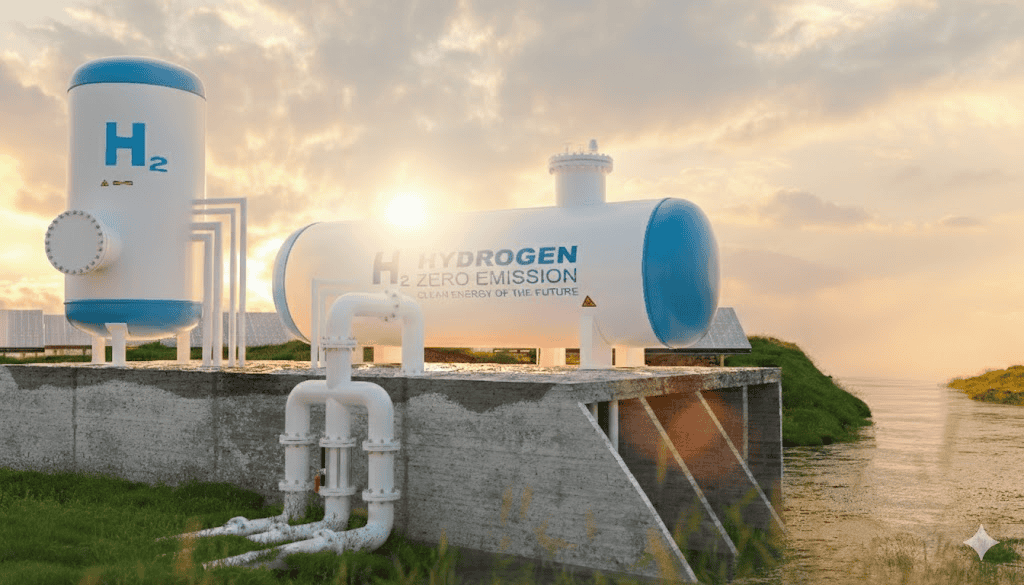
Hydrogen is no longer a future concept—it’s already entering a variety of discussions around blending, pilot projects, and long-term decarbonization strategies throughout the natural gas industry. While hydrogen as a solution offers real potential, it also introduces a hard truth: not all valve technology is ready for it.
At Armour Valve Ltd, our team dedicates a substantial amount of time talking with utilities, pipeline operators, and midstream companies about what hydrogen actually means for existing infrastructure. The challenges aren’t simply theoretical…they’re real, involving mechanical, operational, and financial factors; and valves with its accompanying technology sits right at the center of these discussions.
Why Hydrogen Is Hard on Valves
The first important factor to understand is that hydrogen behaves very differently than natural gas. Its small molecular size makes it far more likely to escape through seals, packing, and microscopic material imperfections. Over time, this can lead to increased leakage rates, growing safety concerns, and lost efficiency.
Even more concerning is the process of hydrogen embrittlement. Here, certain metals—especially those not specifically engineered for hydrogen usage, can become brittle and crack under prolonged exposure. Certainly, not something an operator wants to learn the hard way.
In summary, specific valves that have performed reliably for decades with natural gas, may not necessarily be suitable for solely hydrogen or even hydrogen-blended environments.
Blending — Not to be Considered “Low Risk”
A common assumption we hear is: “We’re only blending a small percentage—shouldn’t be a problem.”
The reality however, is that even low-percentage hydrogen blends can hurt materials, seals, and actuation systems that were never designed for it.
This is why strategic valve selection, material compatibility, and emissions performance become critical variables more than ever. For our team, ‘hydrogen-ready’ isn’t just for marketing purposes—it means proven under real operating conditions.
Valve Design Makes the Difference
In our experience supplying severe and specialty valve solutions, specific design factors consistently stand tall above the rest for hydrogen applications:
-
- ︎ Material selection: Not all steels, alloys, or elastomers respond the same way to hydrogen exposure
- ︎ Sealing technology: Low-emission and zero-bleed designs are critical to controlling fugitive emissions
- ︎ Precision control: Tight shutoff and accurate flow control reduce pressure fluctuations that accelerate wear
- ︎ Testing and certification: Hydrogen service demands more than standard pressure tests
Make no mistake…these aren’t simply ‘nice-to-haves’, they’re required risk controls.
Our Approach at Armour Valve
As we’ve shared in previous discussions on our blog at armourvalve.com/blog, our team doesn’t believe in one-size-fits-all solutions…especially when safety and long-term reliability are at stake.
To begin with, our role is to help natural gas operators ask the right questions early:
-
- ︎ Is this valve genuinely hydrogen-compatible and tested for hydrogen?
- ︎ What happens to emissions performance over time?
- ︎ How will this choice affect maintenance cycles and regulatory compliance?
By combining proven valve technology, trusted manufacturing partners, and our team’s in-house technical expertise, Armour Valve helps clients prepare for hydrogen without compromising their ongoing operations.
The Takeaway
Hydrogen can’t be a simple switch you turn on—it’s a strategic transition you must engineer thoughtfully and carefully. The choice of valves in your system plays one of the most critical (and often underestimated) roles in making that transition safely.
If hydrogen is part of your roadmap—even five or ten years in the future—now is the time to evaluate whether your valve strategy is truly ready for it.
Explore more insights at https://armourvalve.com/blog/
Join the conversation by following Armour Valve on LinkedIn, where we share practical guidance, field-proven lessons, and real-world perspectives on natural gas, hydrogen readiness, and infrastructure reliability.