
Brugg Pipes FLEXWELL Pre-insulated Flexible Pipe
Brugg Pipes FLEXWELL Pre-insulated Flexible Pipe
 SUPPLIER: Brugg Pipes
 AVAILABILITY: North America
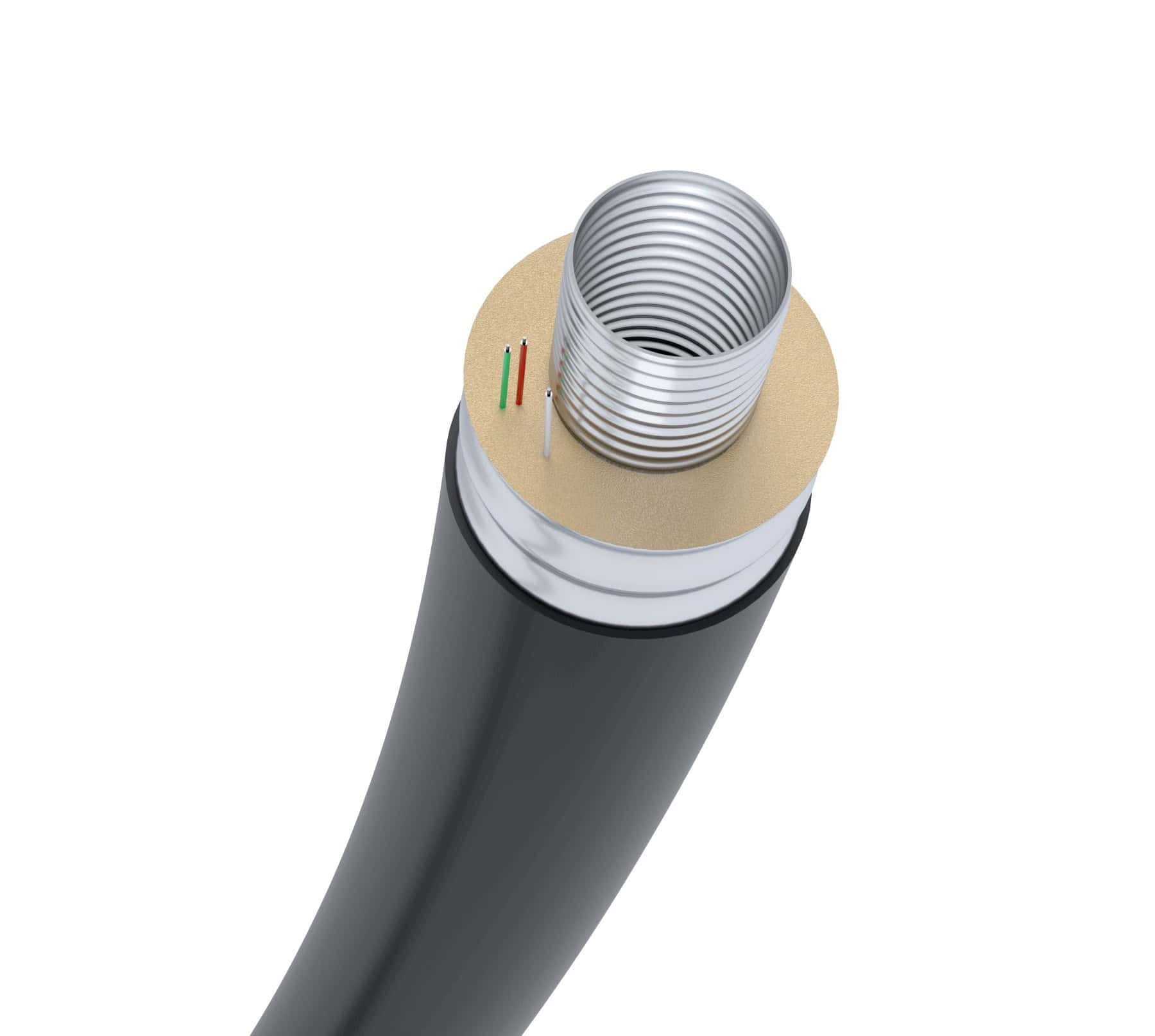
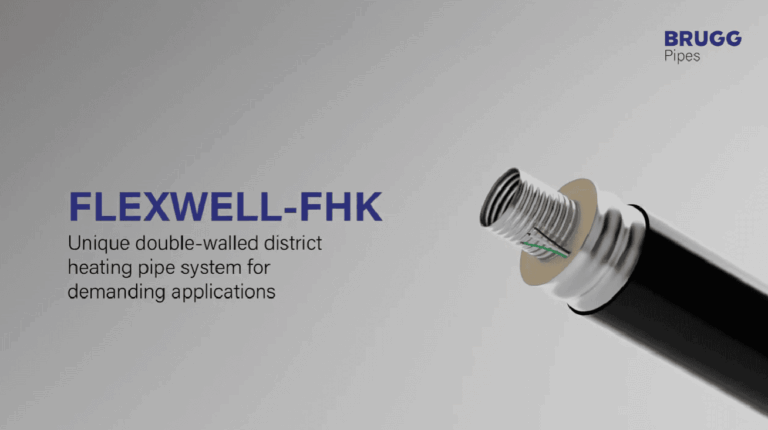
Brugg FLEXWELL district heating cable (FHK) is a flexible pipe system that offers a high level of safety and integrity due to its double-walled design (with metal inner and outer pipes) and its integrated monitoring system.
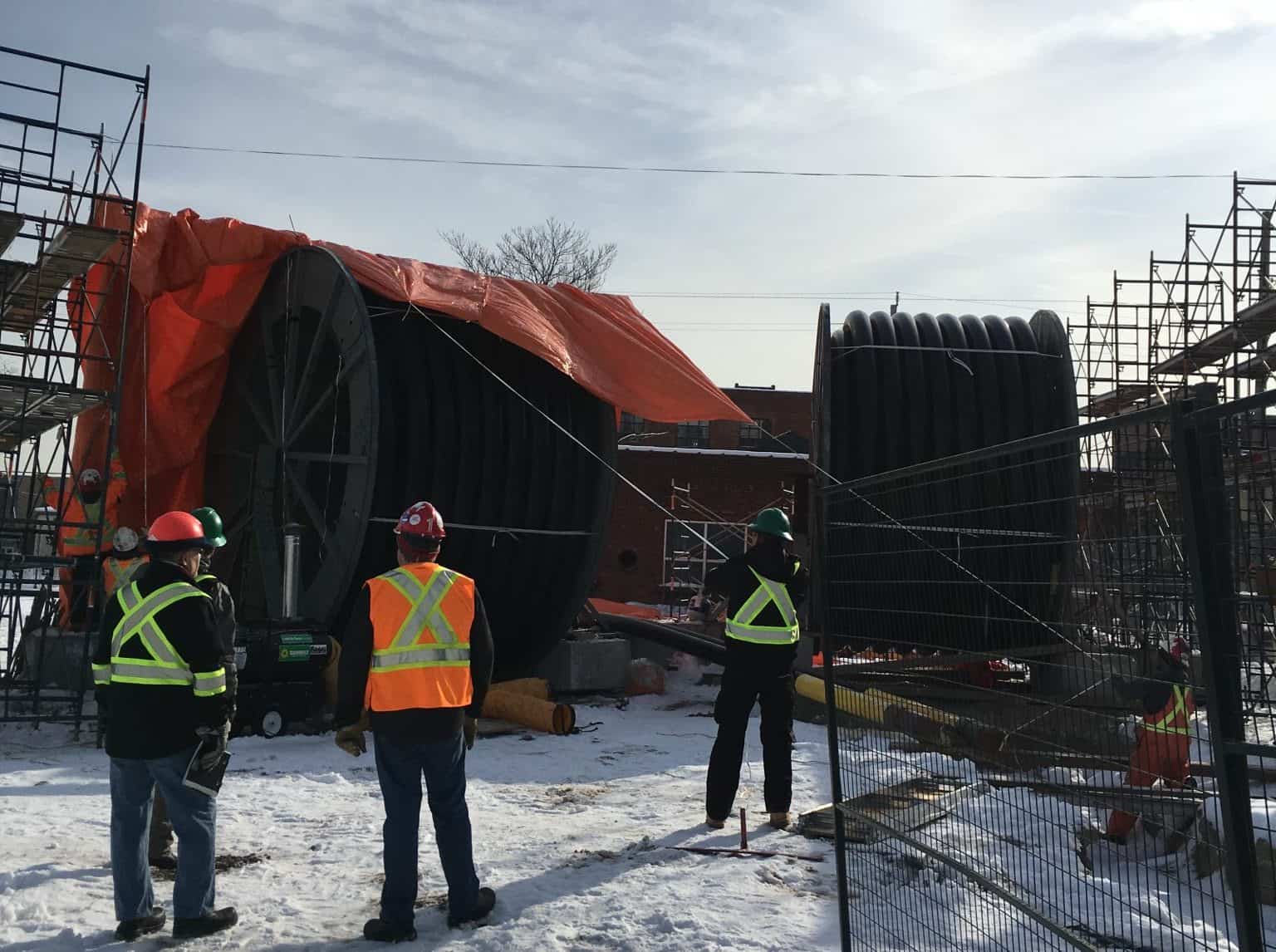
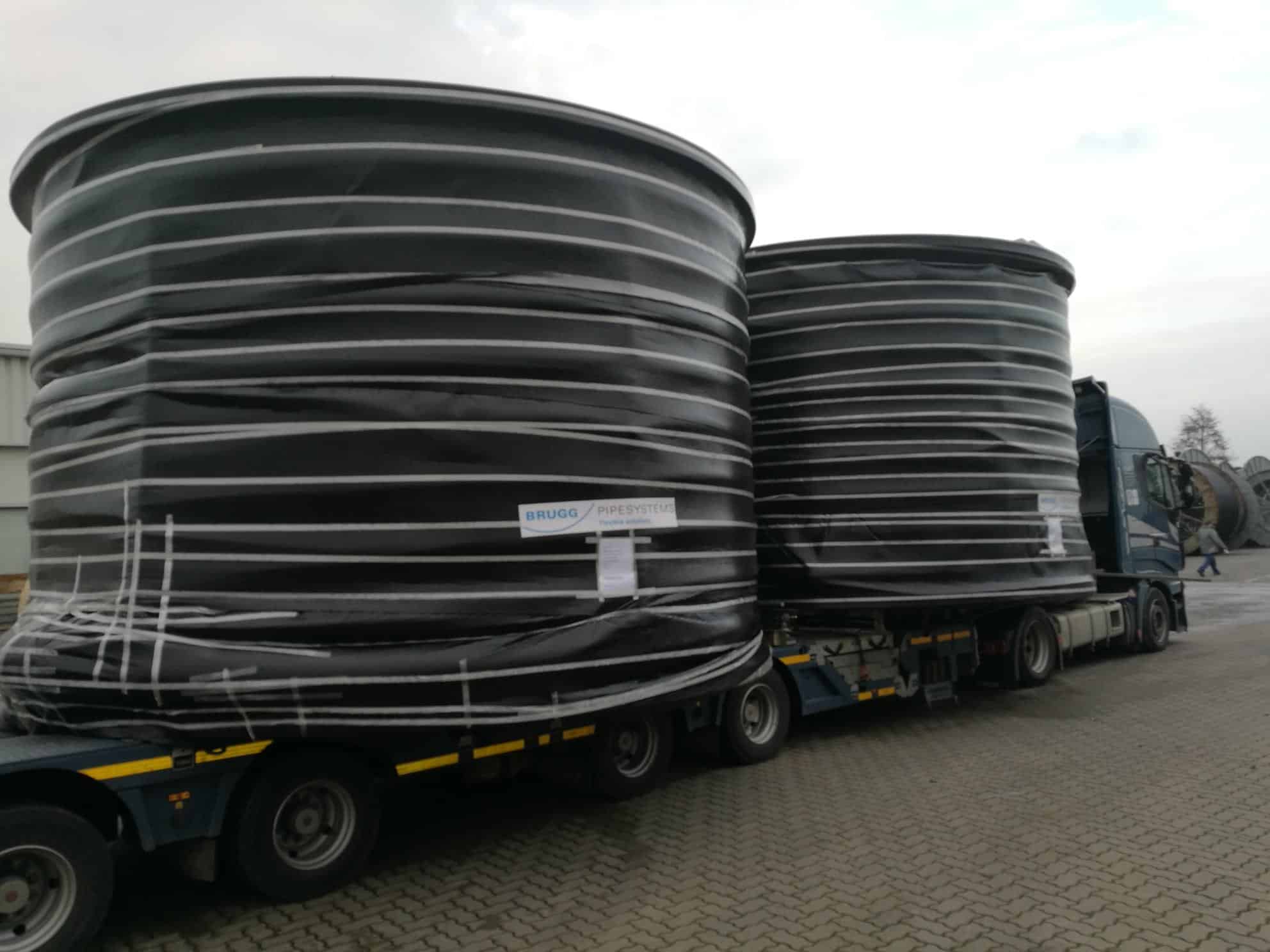
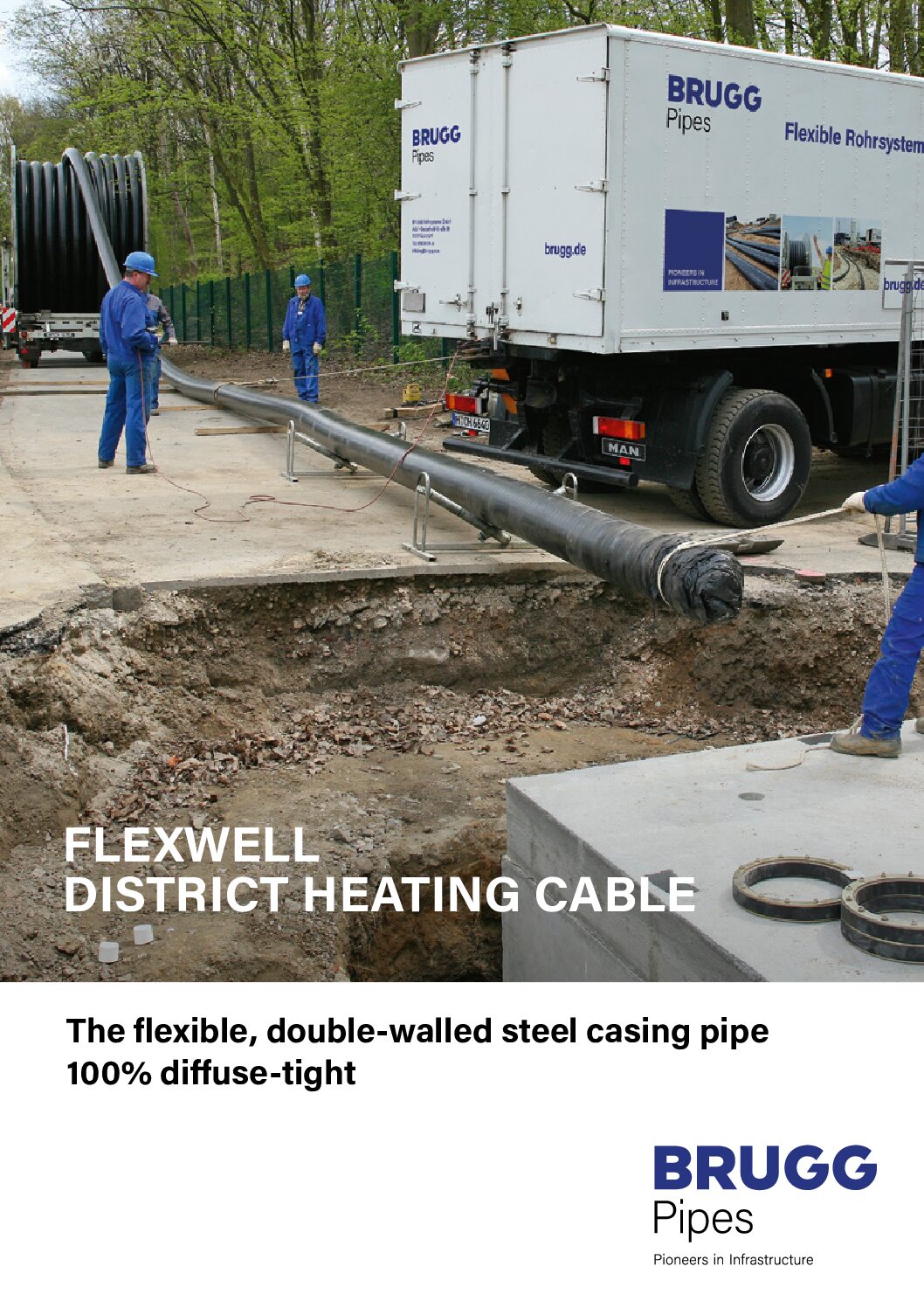
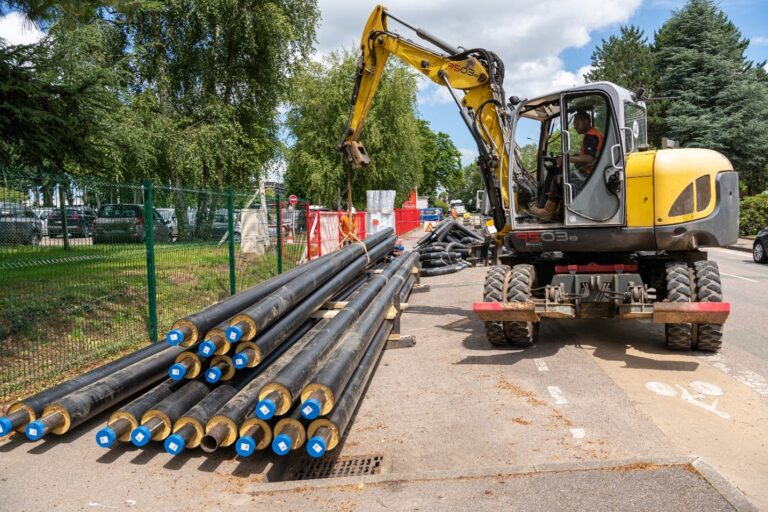
FLEXWELL FHK is bendable, supplied in continuous lengths of coil. This flexible design results in no buried connections and requires no welding or leak tests along the pipe route. This unique pipe can also be directionally drilled with minimal disruption where trenching is not possible or desired.
Design Parameters
- Campus Energy Systems
- District Heating Networks


Frequently Asked Questions
Find quick answers to some of the most common questions
How does BRUGG FLEXWELL eliminate underground pipe joints and leaks?
FLEXWELL is supplied in long continuous stainless‑steel coils, allowing installers to run pipe underground without buried welds or mechanical joints. Eliminating field joints removes the primary leak points found in rigid steel systems and significantly improves long‑term reliability.
How does FLEXWELL pipe handle thermal expansion underground?
FLEXWELL’s spiral‑corrugated 316L stainless‑steel carrier pipe absorbs axial expansion and contraction along its entire length. This self‑compensating behavior eliminates the need for expansion loops, compensators, or concrete anchor blocks in buried district‑energy installations.
How does FLEXWELL protect its insulation from ground moisture?
FLEXWELL uses closed‑cell PUR insulation fully enclosed within a seamless, waterproof PE outer casing. The bonded construction prevents groundwater ingress, maintains insulation performance, and protects the pipe from soil moisture over decades of service.
How does Flexible Pre‑insulated Pipe reduce installation time and cost?
FLEXWELL coils can be laid directly from reels along curved trench paths and around underground obstacles, eliminating buried welds and joint insulation. This reduces installation time by 40–70% compared to rigid steel piping and lowers overall civil work and labour costs.