

If you’ve ever been knee‑deep in a P&ID review and caught yourself second‑guessing whether a ball, gate, or globe valve actually fits the service conditions, you’re not alone. On paper, the differences appear simple. In the real world—where flow control, shutoff requirements, safety factors, lifecycle costs, and maintenance windows all compete for priority—those differences matter a lot more than they seem.
Selecting the wrong valve can impact everything from pressure stability to system reliability, yet the trade‑offs aren’t always obvious when you’re scanning a vendor package or comparing spec sheets.
This guide cuts through the noise with a practical breakdown of how each valve works, where it shines, and where it struggles—so you can make confident, application‑driven choices every time.
What is A Ball Valve?
Ball valves are one of the most common — and most trusted — isolation valves in industrial service. At their core, ball valves use a simple mechanism: a spherical ball with a straight‑through bore that opens or stops flow with a 90‑degree turn. When the bore aligns with the pipeline, fluid moves freely with minimal restriction. Rotate the handle a quarter‑turn, and the solid side of the ball blocks the line completely, delivering fast, positive shutoff.
Ball valves come in three main port configurations: full port, reduced port, and V‑port.
- Full‑port designs match the pipe diameter, minimizing pressure drop and allowing maximum flow — ideal when efficiency matters.
- Reduced‑port valves use a smaller opening, slightly limiting flow but reducing valve size, weight, and cost.
- V‑port valves feature a V‑shaped opening that provides more precise, controllable flow — a step beyond simple on/off service.
Beyond port geometry, ball valves are engineered in two primary styles: floating ball and trunnion‑mounted ball. The difference lies in how the ball is supported — a detail that directly affects sealing performance and pressure capability.
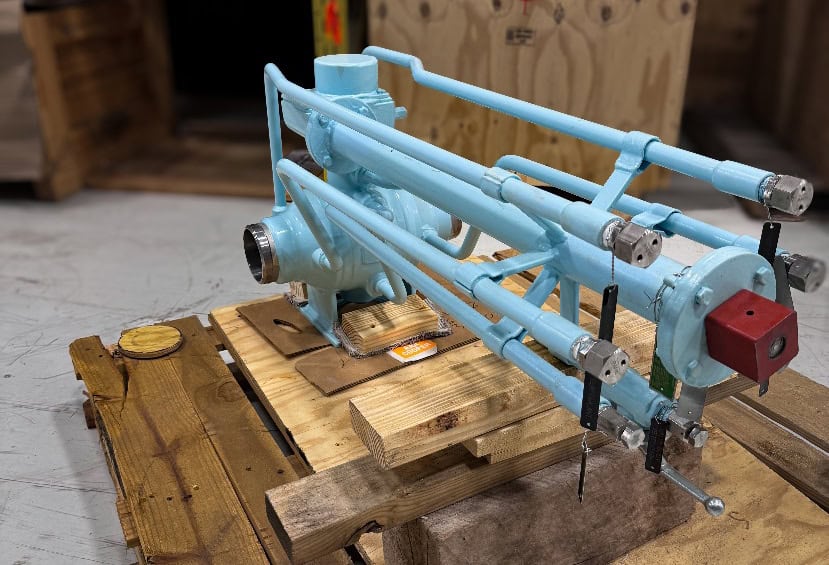
- In a floating ball valve, the ball isn’t rigidly fixed. Line pressure pushes it into the downstream seat, creating a tight seal. This makes floating ball valves well‑suited for small to mid‑size applications and low to medium pressures.
- A trunnion‑mounted ball valve uses a top and bottom shaft to hold the ball in place. Because the ball doesn’t shift under pressure, the seats move instead — a design built for larger sizes and demanding high‑pressure or high‑temperature service.
You’ll commonly find ball valves in water and wastewater systems, oil and gas pipelines, chemical processing, and a wide range of industrial and manufacturing operations. At Armour Valve, we support these applications with proven solutions like Boehmer ball valves for natural gas service and Conval’s Camseal metal‑seated ball valves, engineered to reduce maintenance and downtime in severe, high‑pressure, high‑temperature environments.
Where They Shine
- Reliable shut-off performance
- Very low pressure drop
- Compact and lightweight
- Ideal for automation (electric, pneumatic, hydraulic)
- Great for clean service and frequent cycling
Where They Struggle
- Not designed for throttling — expect seat wear and instability
- Cavity pressure buildup can be a concern in some designs
- Abrasive or dirty media can erode seats
What is a Gate Valve?
Gate valves are classic, reliable isolation valves commonly used where full, unrestricted flow is essential. They’re also known as multi‑turn valves, because opening or closing them requires several full rotations of the handwheel. Unlike quarter‑turn valves, this gradual motion lifts or lowers the gate smoothly through the flow path.
A gate valve works much like a sliding door inside a pipeline. Rotating the handwheel raises the gate to create a fully open, unobstructed passage. Turn it the other way, and the gate lowers until it blocks flow completely. This wide‑open flow path is why gate valves are ideal for large‑diameter lines and applications where pressure drop must be minimized. But because the gate sits directly in the flow when partially open, gate valves are not suited for throttling—partial operation creates vibration, turbulence, and seat damage.
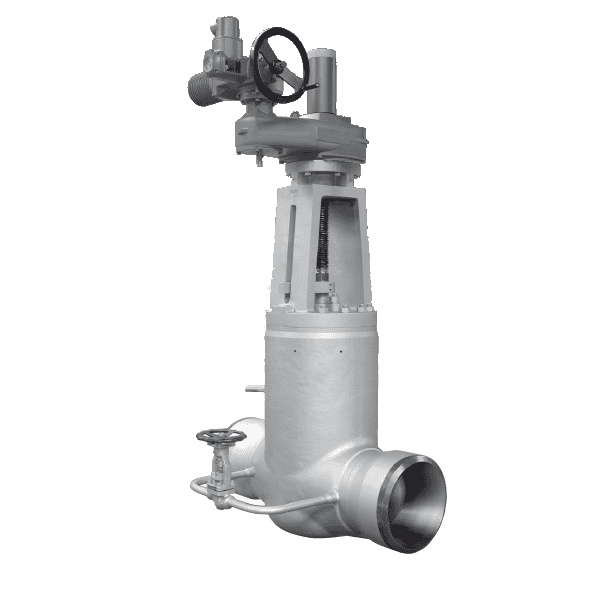 Gate valves are available in several configurations, primarily reduced port, full port, wedge gate, and parallel slide designs.
- Wedge gate valves use a single, wedge‑shaped gate that presses into matching seats. Much like a doorstop wedged into place, the angled geometry helps the gate lock tightly for a strong, dependable seal—even when the system contains minor solids or suspended particles.
- Parallel slide gate valves use two flat discs that move between parallel seats. A spring or mechanical spreader pushes the discs outward, and line pressure reinforces the seal. This design excels in applications requiring tight shutoff with low operating torque and reduced risk of thermal binding.
Gate valves also come in forged‑body and cast‑body constructions.
- A forged body is created by compressing solid metal under high pressure, producing a dense, high‑strength structure ideal for extreme pressures or temperatures.
- Cast bodies are formed by pouring molten metal into a mold, enabling more complex shapes at a lower cost—well suited for general industrial service.
You’ll typically find gate valves in water distribution networks, steam systems, buried service, and pipelines where full‑bore, low‑resistance flow is critical. At Armour Valve, we support these demanding applications with Conval’s long‑life gate valves, Persta’s high‑pressure forged gate valves, and Stainless Valve Co.’s O‑Port slide gate valves, engineered for challenging media and severe service environments.
Where They Shine
- Minimal pressure drop when fully open
- Suitable for large diameters
- Handles high temperature and pressure well
- Common in water, steam, and pipeline applications
Where They Struggle
- Not suitable for throttling — vibration and seat damage are real risks
- Slow operation
- Can seize if not cycled regularly
- Larger footprint than ball valves
What is a Globe Valve
Globe valves are engineered for precise flow regulation, making them the go‑to choice when control—not just isolation—is the priority. Unlike ball or gate valves, which excel at full open or full closed service, a globe valve is built for modulation. Inside the valve, a disc or plug moves vertically against a stationary seat, much like adjusting a faucet. This design allows operators to fine‑tune flow, manage pressure, and stabilize process conditions with a level of accuracy other valve types can’t match.
Because fluid must change direction through the valve body, globe valves create a higher pressure drop than ball or gate valves. But in applications where control, consistency, and responsiveness are more important than maximizing flow, that trade‑off is not only acceptable—it’s exactly why engineers choose a globe valve.
Typical uses include throttling service, pressure regulation, flow modulation, and applications where repeatable, stable performance is essential. For a deeper dive into globe valve design, performance characteristics, and ideal service conditions, explore our full guide on Globe Valve Basics.
Where They Shine
- Excellent throttling and modulating control
- Predictable flow curve
- Good shutoff capability
- Suitable for high differential pressure
Where They Struggle
- Higher pressure drop than ball or gate valves
- Larger and heavier
- Typically higher cost
- More complex maintenance
Side‑by‑Side Comparison: Ball-Valve-vs-Gate-Valve-vs-Globe-Valve
Valve selection ultimately comes down to how each design behaves in real service conditions. While ball, gate, and globe valves can all provide isolation, they operate differently and excel in very different roles. This comparison highlights the key distinctions so you can choose the valve that delivers the performance, control, and reliability your application demands.
| Feature | Ball Valve | Gate Valve | Globe Valve |
|---|---|---|---|
| Valve Operation | Quarter‑turn | Multi‑turn | Multi‑turn |
| Flow Path | Straight‑through, full bore | Full bore when open | S‑shaped, more restrictive |
| Shutoff Quality | Excellent | Good | Very good |
| Throttling Capability | Poor | Poor | Excellent |
| Pressure Drop | Very Low | Very low (when open) | Higher |
| Typical Size Range | Small to medium | Medium to large | Small to medium |
| Footprint | Compact | Moderate | Larger and heavier |
| Maintenance Needs | Low | Low to moderate | Higher in severe or control service |
| Common Applications | Water/wastewater, oil & gas pipelines, chemical processing, general industrial | Water distribution, steam isolation, buried service, pipelines | Steam conditioning, boiler feedwater, pressure‑reducing stations, modulation and control |
How to Choose the Right Valve for Your Application
Choosing the right valve starts with defining the function it needs to perform. If the requirement is simple, reliable isolation, a ball or gate valve will typically serve best. When the application calls for throttling, modulation, or precise flow control, a globe valve is almost always the right choice.
Once the function is clear, the next step is to evaluate the service conditions. Operating pressure, temperature, media composition, cleanliness, and corrosiveness all influence which valve design will provide safe, consistent performance over time.
Operational requirements also play a critical role. Consider how often the valve will cycle, whether fast actuation is essential, and if the system calls for electric, pneumatic, or hydraulic automation.
Finally, factor in system constraints—available space, weight limitations, allowable pressure drop, and ease of access for maintenance. These practical considerations often separate a valve that simply works from one that works well throughout the lifecycle of the system.
Conclusion
There’s no single “best” valve — only the best valve for your application. Ball valves deliver fast, reliable shutoff with minimal pressure drop. Gate valves shine in full open/full close service, especially in larger lines where unobstructed flow matters. Globe valves provide the precise control and modulation needed for throttling and pressure management.
If you’re weighing your options and want a deeper comparison, our ball‑valve‑vs‑gate‑valve‑vs‑globe‑valve guide offers a detailed look at how each valve performs in real‑world service. And if you’re navigating a challenging application or want a second set of eyes on your selection, our client relations managers are here to help you make the right call.
Explore our full range of industrial valves or connect with our team for support in choosing the best solution for your system.