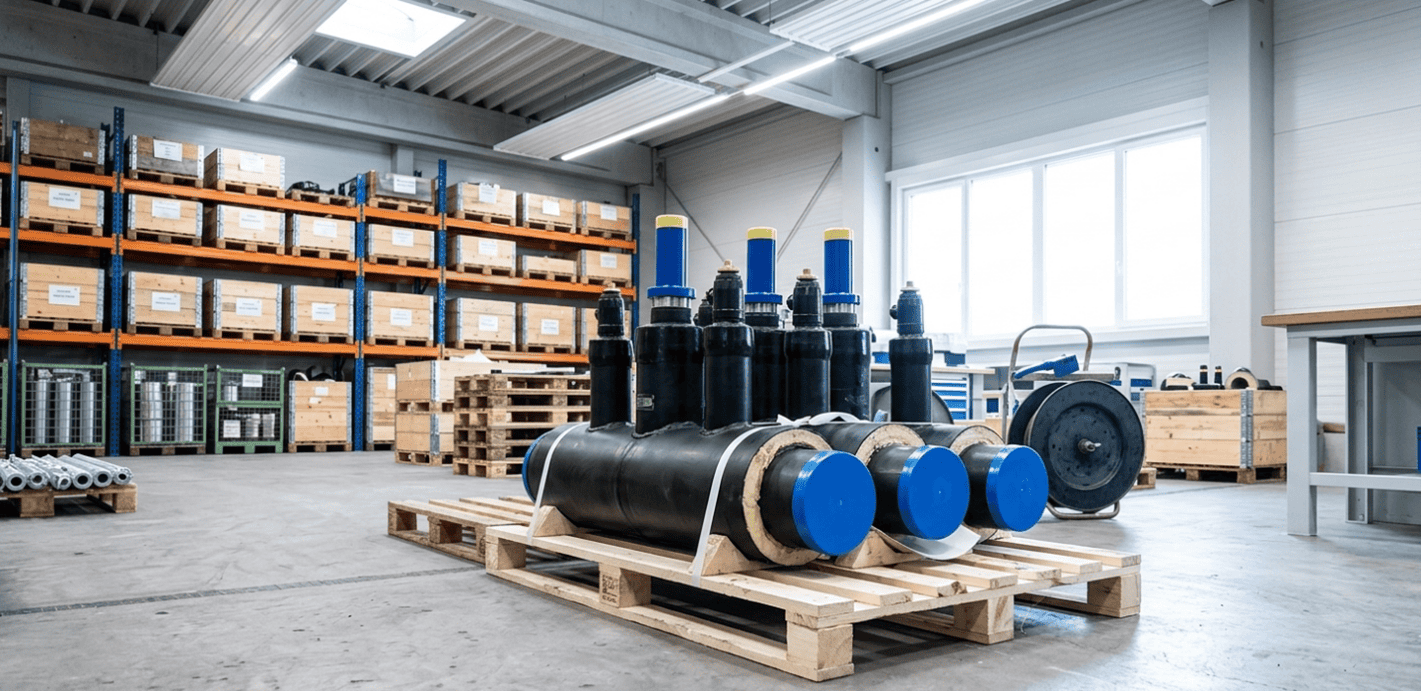
Underground district heating valves rarely get the attention they deserve, yet they play an important role in the reliability and safety of an entire network. When these valves fail, the consequences can be immediate and costly: emergency shutdowns, excavation work, service interruptions, and in the worst cases, dangerous releases of hot water or steam. What makes these failures particularly challenging is that the root cause is often hidden from view until the moment something goes wrong. They must deliver reliable shut‑off and maintain long‑term performance while buried in an environment that is anything but controlled.
Isolation valves installed in district energy piping should not represent a structural weak point in the system. Because they are exposed to the same pressure, axial, and bending forces as the adjacent piping, valves should be designed to match the piping pressure class. Field experience shows that isolation of buried piping can release accumulated thermal, installation, and soil‑restraint stresses, resulting in axial and bending movement of the line. If valve components are not designed to withstand these mechanical loads, such movement can distort the ball or misalign seating surfaces, leading to difficult operation, leakage, or loss of isolation capability.
Why Underground Valves Are Vulnerable to Corrosion?
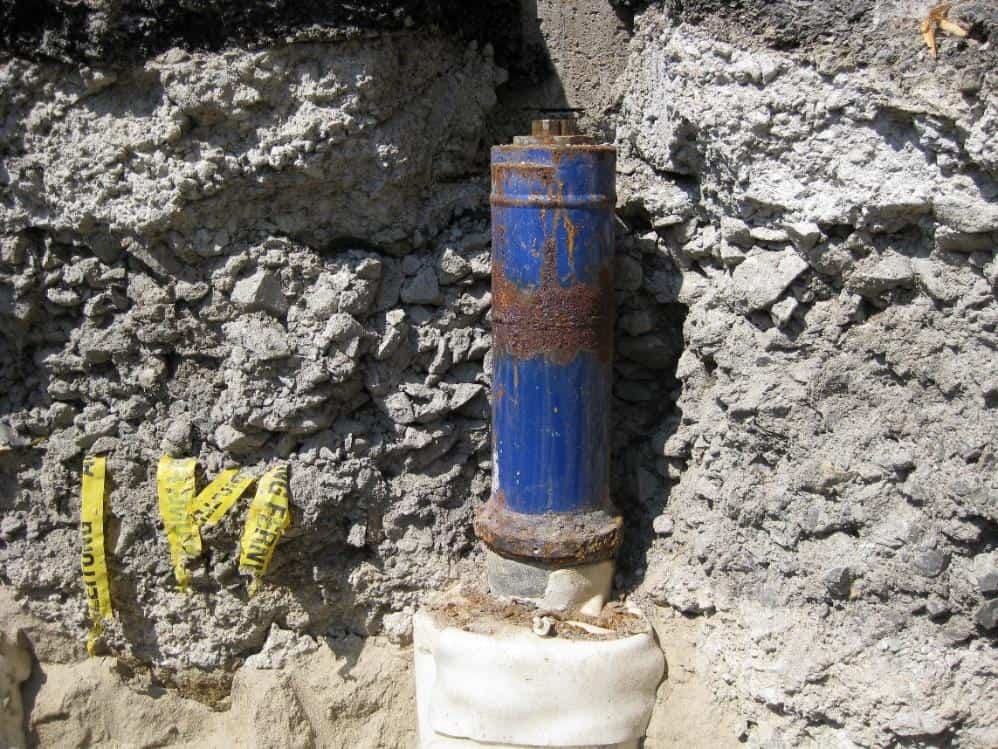
Corrosion remains a concern for buried district heating valves, especially vent and drain valves, because moisture can enter the insulation system and remain hidden. Winter conditions accelerate this: meltwater mixed with road salt often drains into the road box and seeps into the pre-insulation. Once moisture is inside, corrosion progresses out of sight.
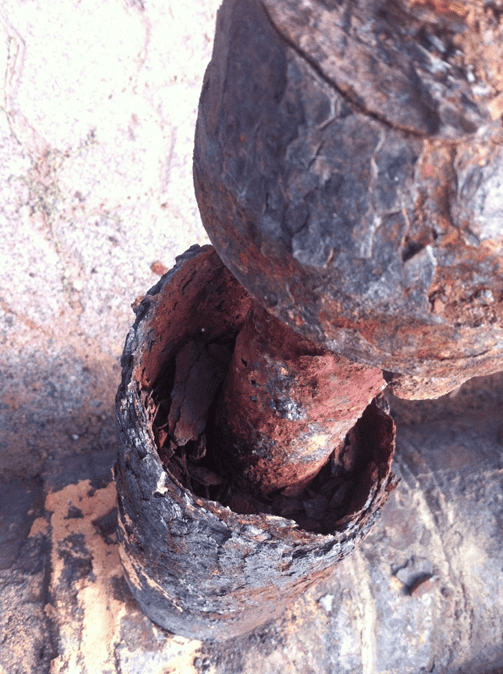 Temperature effects can worsen the issue. At around 70–80°C, polyethylene surfaces can develop micro-capillaries that allow moisture to migrate deeper into the insulation. End caps, often assumed to be watertight, are only splash-proof and do not prevent this ingress.
When Corrosion Turns Dangerous
If a corroded valve is operated, weakened material can fail suddenly, releasing hot water or steam. We have seen this in the field where manual operation of a corroded vent or drain connection triggered a sudden and dangerous release of hot water and steam. Fortunately, the operator was not seriously injured, but the incident illustrates how quickly a corroded valve can escalate into a serious safety hazard.
These failures are not random. They are predictable outcomes of moisture ingress, insulation breakdown, and inadequate installation practices. At Armour Valve, we recommend routine inspections to identify early signs of corrosion before they develop into costly failures.
How to Prevent Failures in Underground District Heating Valves
Preventing these failures requires a combination of proper valve selection, insulation, and installation practices. Underground ball valves should be protected with PE sleeve pipes equipped with screw caps to prevent moisture ingress. Vent and drain valves require even more attention: pre-insulation must extend to the top edge, and an additional protective pipe—either PE or sewer pipe—should be installed with a secure cover to keep water out.
Material Choices That Improve Valve Reliability
Material selection also plays a decisive role in long‑term reliability. Stainless steel components offer inherently higher corrosion resistance, while steel valves with welded extension pipes and fully pre‑insulated EN 253–compliant designs provide better protection against moisture ingress when installed correctly. These approaches reduce the likelihood of moisture‑related failures and support longer service life in buried environments.
Avoid Installation Errors That Create Long-Term Problems
Even the best valve can fail prematurely if installed incorrectly. For example, Actuation mountings for direct-buried valves can create pathways for moisture if not properly sealed. The issue is not the valve design itself but the sealing around it during the construction phase. A small oversight during installation can lead to major problems down the road.
Utilizing Boehmer Isolation Ball Valves
Boehmer isolation ball valves are engineered to withstand the demanding mechanical and thermal stresses inherent in district heating networks. Their fully welded, forged steel body eliminates flanges and bolted joints—elements that frequently represent structural weak points and are prone to deformation under axial and bending loads. This monolithic forged construction provides exceptional structural integrity, minimizes potential leak paths, and ensures the valve remains dimensionally stable even when the surrounding piping is subjected to stress. Double stem sealing further enhances reliability by preventing water ingress and protecting the stem and internal components from corrosion—an essential requirement for buried installations with limited access.
The trunnion-mounted ball design stabilizes the ball under load, preventing distortion and maintaining consistent seat alignment. This design ensures smooth, low-torque operation even when pipeline movement occurs due to thermal expansion, soil settlement, or stress redistribution during isolation.
Boehmer valves can be customized to meet specific district energy system operating conditions, with multiple body configurations, material options, and actuator arrangements available. They are suitable for installation in pre-insulated steel pipe systems as well as PE-RT piping systems, supporting both heating and cooling applications.
To accommodate the realities of field installation, Boehmer valves also allow for stem extensions to be added on site when construction drawings and actual site conditions differ—providing flexibility without compromising valve integrity or performance.
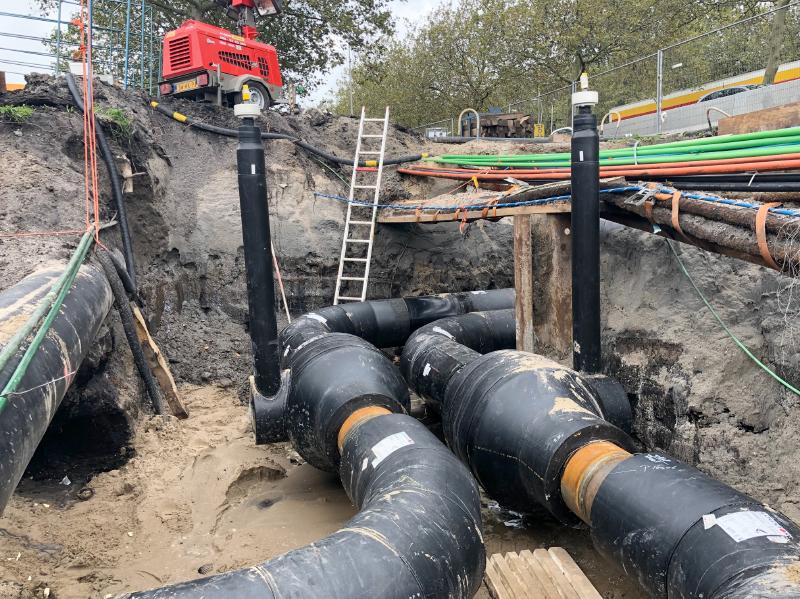
The Isolation Valve: The Most Overlooked Component in District Heating Networks
The isolation valve may be buried, but it should never be forgotten. It is one of the most critical—and most underestimated—components in a district heating network. Buried underground and expected to perform for decades, its reliability is determined long before installation begins. In many cases, premature failures, leakage, or operational difficulties can be traced back not to installation practices, but to the selection of an inappropriate valve design for demanding district heating conditions. Selecting the correct isolation valve is therefore a strategic decision—not a commodity purchase. When an underground isolation valve fails, the consequences are severe: costly excavation, service disruptions, safety risks, and unplanned outages that can escalate into hundreds of thousands of dollars in direct and indirect costs.
In a network where reliability is essential, this is one component that deserves far more attention than it typically receives. If underground valve reliability is a priority for your network, Armour Valve can support you with application guidance and engineered solutions tailored to district heating and cooling environments. Request a call back, and a member of our team will connect with you to discuss your project requirements and help you select the right valve solution for your application.